
How to Fix Concrete Cracks in Katy, TX: A Homeowner's Guide
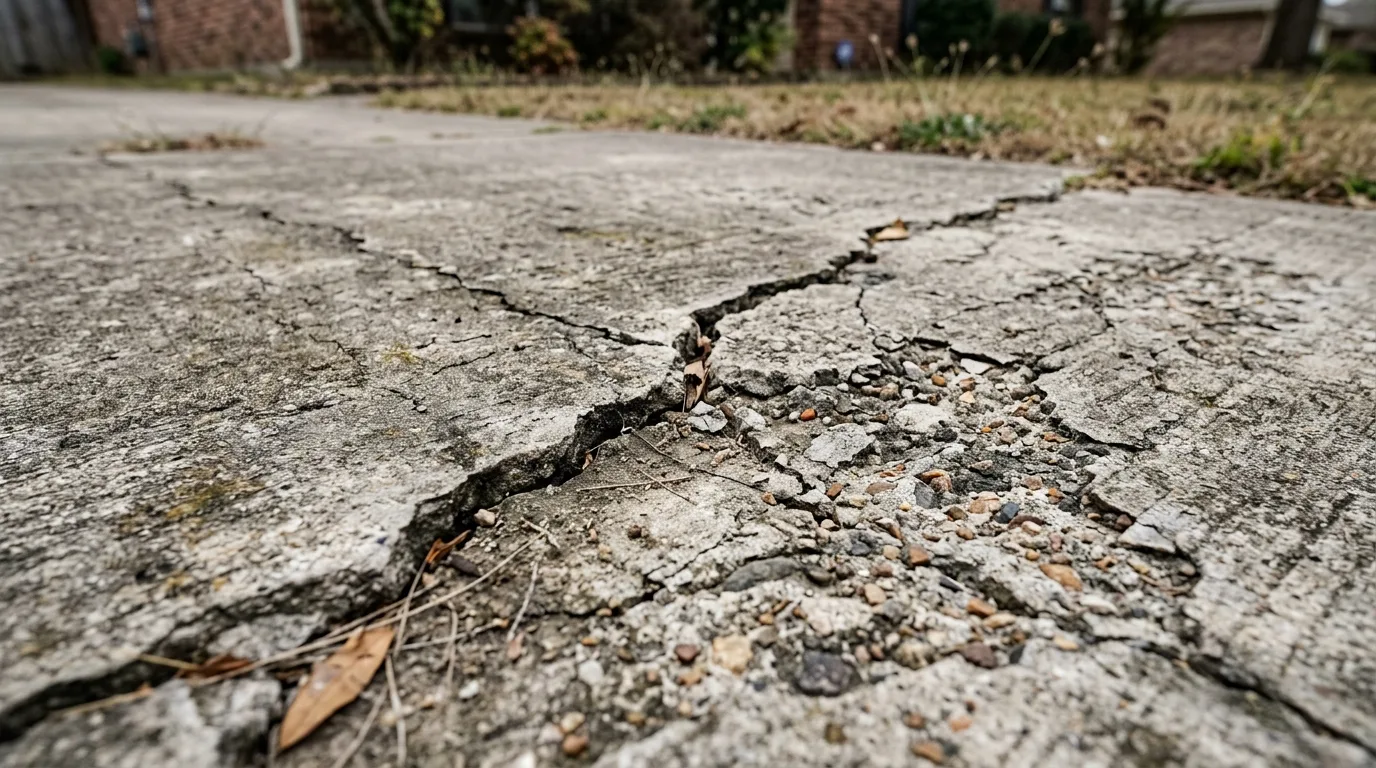
A crack in your Katy driveway or patio is not necessarily an emergency — but it is always a message. The crack is telling you something about what is happening beneath the surface. In Fort Bend County, where Houston Black clay soil is the underlying variable for most concrete problems, reading that message correctly determines whether a $150 DIY fix solves the problem or whether you spend $150 on a repair that fails within a season. This guide covers crack types, what each type means, what you can fix yourself, and when the problem requires a professional.
Free Concrete Crack Assessment in Katy
We identify the cause and recommend the right fix. Call (888) 376-0955.
Why Cracks in Katy Concrete Are Different
Before getting into repair techniques, the most important principle for Katy homeowners: in Fort Bend County, most concrete cracks are caused by what is happening beneath the slab, not within it. The Houston Black clay soil undergoes repeated cycles of expansion (when Katy’s rains saturate it) and contraction (when dry summer weather desiccates it). Each cycle applies stress to the concrete from below. Repairing the surface crack without understanding whether the underlying cause is active is the most common maintenance mistake in this market.
A crack fill that goes over an active soil problem is not a repair — it is a temporary cosmetic improvement. The crack will re-open within one or two wet/dry cycles because the force producing it is still present. This is why the same crack keeps coming back for some Katy homeowners despite repeated filling.
Understanding which type of crack you have determines both the urgency and the appropriate fix.
Crack Type 1: Hairline Cracks at Control Joints
What they look like: Very fine, barely visible cracks running along the tooled or saw-cut control joints in the slab. Less than 1/16 inch wide. No vertical displacement between sides.
What they mean: Normal. Control joints are designed to be the weakest point in the slab — this is where stress relieves as the concrete expands and contracts. A hairline crack at a control joint means the slab is doing exactly what it is supposed to do.
What to do: Monitor annually. Apply sealer over the joint as part of your regular sealing cycle. No filler needed unless the crack is widening.
Crack Type 2: Hairline Cracks Away from Control Joints
What they look like: Fine cracks crossing the slab surface away from the planned control joint locations. Under 1/8 inch wide, no displacement.
What they mean: Usually indicates drying shrinkage during curing (if the slab is relatively new) or minor thermal movement. May also indicate control joints were spaced too widely, allowing the slab to crack randomly rather than at the joints.
What to do: Monitor for widening over 6–12 months. Fill with flexible polyurethane crack filler if wider than 1/8 inch and stable. If the crack is new and widening, assess for sub-slab causes before filling.
Crack Type 3: Working Cracks (Growing, Wider than 1/4 Inch)
What they look like: Cracks that are visibly wide, may show irregular edges, and are demonstrably wider than they were last year when you photographed them.
What they mean: The sub-slab condition producing the crack is still active. This is Fort Bend County’s soil movement signature. Filling without addressing the cause produces a temporary repair.
What to do: Do not attempt a permanent DIY repair. Call for an assessment that includes drainage inspection. A professional who assesses the drainage pattern around the crack and the subbase condition can determine whether the crack will continue to grow after repair. Depending on findings, the fix may be crack fill plus drainage correction, mudjacking plus crack fill, or section replacement if the subbase has failed.
Crack Type 4: Displacement Cracks (One Side Higher)
What they look like: One side of the crack sits higher than the other — a measurable step, sometimes large enough to be a trip hazard.
What they mean: Differential soil movement beneath different sections of the slab. One section has been lifted by soil expansion or the adjacent section has settled into a void. This is structural — the two sections are no longer supported equally.
What to do: This requires professional repair. Options include mudjacking the lower section back to level (if the differential is under 1 inch and the subbase is otherwise sound), grinding the high edge to eliminate the trip hazard while addressing the cause, or section replacement if the subbase failure is extensive.
Crack Type 5: Corner and Edge Cracks
What they look like: Cracks running diagonally from corners of the slab, or cracks running parallel to edges within 6–12 inches of the edge.
What they mean: Edge and corner areas have the least lateral support and are the most exposed to water infiltration. In Katy, these locations experience the highest moisture cycling because rain water concentrates at edges. Corner cracks running diagonally from the corner are one of the most common patterns in Fort Bend County driveways on clay soil.
What to do: If the crack is under 1/4 inch and stable, fill with polyurethane crack filler. If the edge is beginning to lift or the corner section is rocking, the subbase at the edge has been compromised by water infiltration — professional repair that addresses both the drainage source and the structural issue is needed.
Concrete Crack Repair in Katy — We Fix the Cause
Not just the surface. Free assessment — call (888) 376-0955.
DIY Concrete Crack Repair: What Katy Homeowners Can Do
For stable cracks under 1/4 inch that are not growing, DIY crack filling is a reasonable maintenance task. Here is the correct process for Katy conditions:
What you need:
- Polyurethane concrete crack filler (not mortar, not caulk, not epoxy for flexible cracks) — available at concrete supply stores
- Wire brush and vacuum
- Backer rod (foam rod) for cracks deeper than 1/2 inch
- Safety glasses and gloves
The process:
- Clean the crack thoroughly. Use a wire brush, then blow or vacuum out all debris. The filler will not bond to dusty or dirty crack walls.
- Dry completely. Fill only when the crack is dry. In Katy’s humid climate, you may need to wait after a rain event and check with a moisture meter or tissue paper test.
- Install backer rod for cracks deeper than 1/2 inch. The rod fills the depth and ensures the filler doesn’t go deeper than needed, allowing it to flex correctly.
- Apply polyurethane filler. Slightly overfill — the filler shrinks slightly as it cures. Tool smooth with a putty knife.
- Allow to cure per manufacturer’s instructions (typically 24 hours) before foot traffic.
- Seal the repaired area as part of your next sealing cycle.
What DIY crack filling does not do: It does not address the cause of the crack. It does not prevent the crack from re-opening if the sub-slab condition producing it is still active. It is a maintenance intervention for stable, non-growing cracks — not a structural repair.
When to Call a Professional
Call for a professional assessment when:
- The crack is wider than 1/2 inch
- One side is higher than the other (displacement)
- The crack has been filled before and reopened
- New cracks are appearing each season
- Sections rock or sound hollow when knocked on
- Water pools on or near the cracked area after rain
These signs indicate active sub-slab problems that DIY surface treatment will not solve. A professional assessment in Katy should include inspection of the drainage around the concrete, not just the crack itself — because in Fort Bend County, drainage is almost always part of the story.
Frequently Asked Questions
Can I fill concrete cracks myself in Katy, TX?
Yes — stable cracks under 1/4 inch that are not growing can be filled by a homeowner using polyurethane crack filler. The key is proper cleaning, complete drying before application, and using the right filler type (not mortar or standard caulk). However, filling a crack that is actively growing or that has returned after previous filling requires professional assessment to identify and address the underlying cause.
How long does concrete crack repair last in Katy?
DIY crack fills on stable cracks last 3–7 years in Katy’s climate before the flexible filler begins to degrade and the joint needs to be cleaned and refilled. Professional repairs that address the underlying drainage or subbase condition last much longer — 10–20 years when the root cause has been corrected. Repairs that address only the surface without fixing the cause commonly fail within 1–2 seasons in Fort Bend County.
Does fixing a crack prevent future cracks in my Katy driveway?
Filling a crack prevents water infiltration at that specific location, which reduces the moisture cycling at the subbase beneath the crack. This slows the progression of the existing crack and reduces the risk of adjacent cracking. It does not prevent new cracks from forming elsewhere if the overall drainage and subbase conditions are inadequate. For comprehensive prevention, address drainage at the driveway perimeter and maintain regular sealing.
Related posts:
- When to Repair vs Replace Your Concrete Driveway in Katy
- Why Houston Black Clay Soil Matters for Your Concrete Project
- Concrete Driveway Maintenance Tips for Katy Homeowners
Concrete Crack Repair in Katy — Honest Assessment
We identify the cause, not just the symptom. Free evaluation — call (888) 376-0955.