
When to Repair vs Replace Your Concrete Driveway in Katy, TX
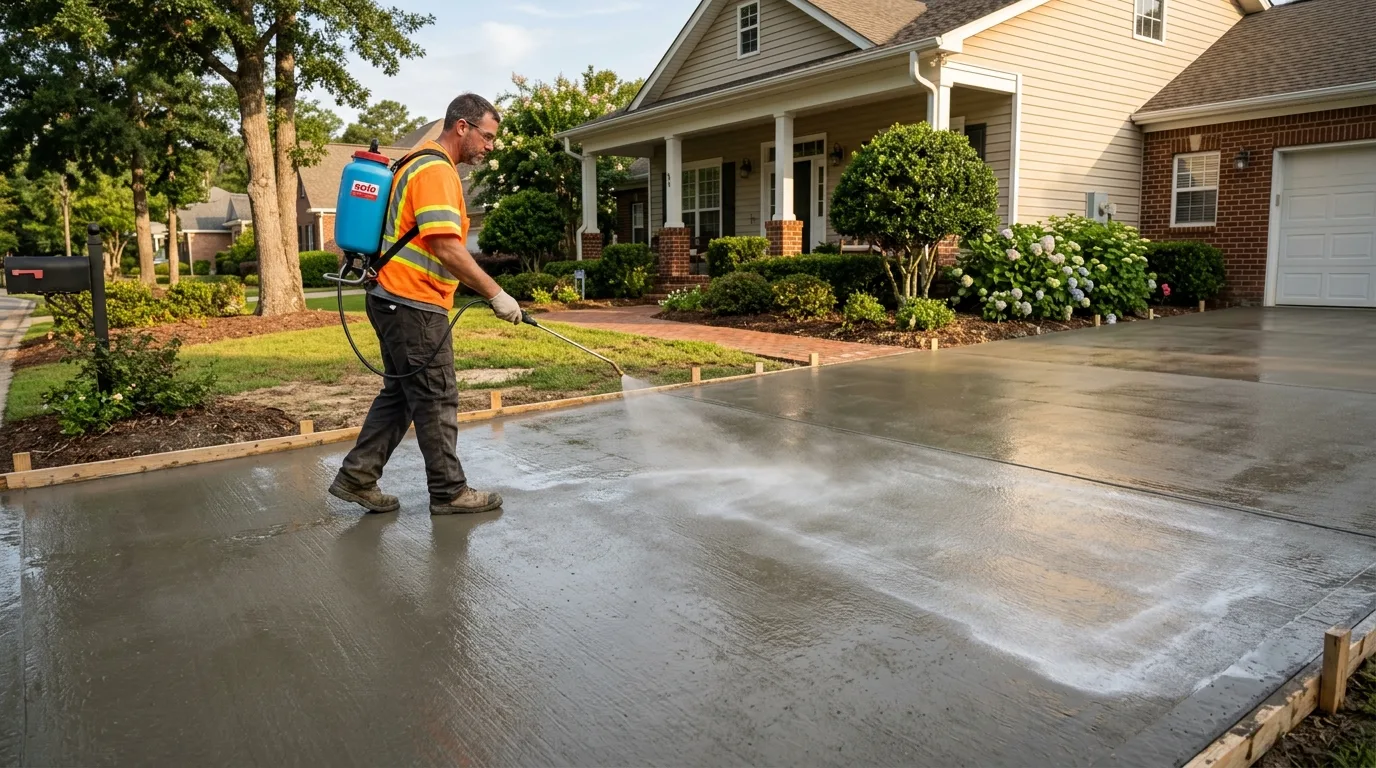
By spring each year, Katy homeowners begin noticing what Katy’s wet winter and dry fall cycles left behind in their driveways — new cracks, widened old ones, or sections that have shifted noticeably. The question that follows is one of the most common we receive: is it time to repair, or should we replace the whole thing? In this post, we cover the decision factors, what each option costs in the Katy market, and the soil-specific context that makes this decision different in Fort Bend County than it would be anywhere else.
Get a Free Repair vs Replace Assessment in Katy
We assess the damage, identify the cause, and give you an honest recommendation. Call (888) 376-0955.
Why This Decision Is Different in Katy
Fort Bend County’s Houston Black clay soil introduces a complicating factor that doesn’t exist in most regions: the soil is still moving. Even after you repair a crack, the same soil expansion and contraction that caused the first crack continues to happen every season. A driveway repair that doesn’t address the underlying drainage or subbase problem that allowed soil movement to crack the slab in the first place will fail again — sometimes within one or two rain seasons.
Before recommending repair or replacement, we always assess the drainage around the driveway and the condition of the subbase. In neighborhoods throughout Cinco Ranch and Firethorne where heavy spring rains saturate the clay soil repeatedly, the relevant question is not just “how bad is the crack” but “will this crack recur after repair, or is the underlying issue correctable?”
Repair: When It’s the Right Answer
Concrete repair is the right choice when the damage is surface-level, the subbase is structurally sound, and the underlying cause can be addressed as part of the repair scope. Specific indicators that repair is appropriate:
Hairline to moderate cracks (under 1/4 inch wide): Small, stable cracks that have not grown significantly over the past year are candidates for polyurethane or epoxy crack fill. If drainage around the driveway is corrected at the same time, these repairs hold for 5–15 years.
Surface spalling without sub-slab damage: If the top layer of cement paste is flaking or pitting but the slab below is solid — you can’t hear a hollow sound when you knock on it — resurfacing with a polymer-modified overlay restores the appearance and function without demolition.
Isolated section settlement (under 1 inch): A single section that has settled slightly can be lifted by mudjacking (pumping grout beneath the slab) if the surrounding sections are in good condition. This costs significantly less than section replacement.
New cracks on a driveway under 15 years old: A relatively young driveway that has developed cracks likely has a correctable cause — drainage, missing control joints, or tree root intrusion — that should be addressed before committing to full replacement.
Replace: When It’s the Right Answer
Replacement is the right answer when the damage is structural, widespread, or driven by a subbase condition that repair cannot correct. Specific indicators that replacement is appropriate:
Widespread cracking across multiple sections: When more than 30% of the driveway surface shows significant cracking, patching every crack individually costs nearly as much as replacement while leaving a visually inconsistent surface that will continue to deteriorate.
Full-depth cracking or section settlement over 1 inch: Cracks that run through the full slab thickness, or sections that have settled more than an inch, indicate the subbase has failed. These require demolition, subbase reconstruction, and new concrete — a repair overlay will not adhere properly to structurally failed concrete.
Hollow-sounding sections: If significant areas of the slab sound hollow when knocked on, voids have formed beneath the slab. Mudjacking can address a small void, but widespread hollow sections indicate pervasive subbase erosion that requires full replacement to correct durably.
Driveway over 25–30 years old: An older driveway with multiple cracks, scaling, and general deterioration is past the point where targeted repairs provide a good return. A full replacement at 25–30 years is typically more economical than patching an aging surface that will require more repairs every year.
Previous repairs that have re-cracked: If crack fills or patches on your Katy driveway have already failed once, the subbase problem has not been corrected. At this point, replacement with proper subbase reconstruction is almost always the better investment.
Not Sure Which Is Right for Your Katy Driveway?
Our assessment identifies the cause of your damage and gives you an honest repair vs. replace recommendation. Call (888) 376-0955.
Cost Comparison: Repair vs Replace in Katy
Concrete repair costs in Katy:
- Isolated crack filling: $200–$500 per repair
- Resurfacing overlay (per sq ft): $3–$7
- Resurfacing a 400 sq ft driveway: $1,200–$2,800
- Mudjacking a settled section: $300–$700 per area
- Full section removal and replacement (per sq ft): $7–$11
Concrete driveway replacement in Katy:
- 200 sq ft single-car: $1,400–$2,200
- 400 sq ft double-car: $2,800–$4,400
- 600 sq ft large driveway: $4,200–$6,600
The break-even analysis: if repair costs more than 50% of replacement cost and the driveway is over 15 years old, replacement typically delivers better long-term value. A resurfacing overlay on a 400 sq ft driveway at $2,000 versus full replacement at $3,600 is a reasonable repair choice if the subbase is sound and the surface is the only problem. If the subbase needs reconstruction anyway — which adds $800–$1,500 to the repair scope — the gap between repair and replace narrows to where replacement makes more financial sense.
The Honest Assessment You Need
The most common mistake Katy homeowners make is getting a repair quote from a contractor who quotes the surface without assessing the subbase — and discovering a year later that the new cracks are wider than the old ones. Concrete repair work in Fort Bend County must include a subbase soundness evaluation and a drainage assessment. Any contractor who quotes crack fills over the phone without seeing the driveway is not giving you a useful quote.
We assess every Katy driveway in person before recommending repair or replacement. If repair is the right answer, we say so and quote it honestly. If replacement is the better value, we explain why and provide the full replacement cost so you can make an informed decision.
Frequently Asked Questions
Can a crack in a Katy concrete driveway be permanently fixed?
Yes — a crack can be durably repaired if the underlying cause is addressed at the same time. A crack caused by a missing or misplaced control joint can be fixed with an epoxy fill and a properly placed saw-cut control joint nearby. A crack caused by poor drainage can be fixed if the drainage is corrected as part of the repair. A crack caused by a failed subbase cannot be durably repaired at the surface alone — the subbase must be addressed.
How long does concrete repair last in Katy?
Concrete crack repairs in Katy last 5–15 years when the underlying cause is identified and corrected. Resurfacing overlays on structurally sound slabs last 10–15 years. Repairs that address only the surface without fixing the drainage or subbase issue causing the damage commonly fail within 1–3 years in Fort Bend County’s climate.
Does repairing my Katy driveway require a permit?
Most surface-level concrete repairs — crack filling, resurfacing, sealing — do not require a permit in Katy or Fort Bend County. Full section removal and replacement may require a permit depending on the area affected. We advise on permit requirements during the assessment so there are no surprises.
Related posts:
- How to Fix Concrete Cracks in Katy, TX
- Why Houston Black Clay Soil Matters for Your Concrete
- How Long Does a Concrete Driveway Last in Katy, TX?
Free Concrete Repair Assessment in Katy
Honest evaluation, clear recommendation, written estimate. Katy Concrete Contractor — call (888) 376-0955.